
REVOLUTIONISING RAIL ASSET LOCATION
Leveraging GPR technology for accurate rail surveying
Severn Partnership was approached by Amey and Transport for Wales to address the challenge of locating hidden assets within the rail infrastructure. The objective was to identify culverts beneath operational rail tracks that posed a potential risk of collapse under increasing pressure from higher-speed trains. To overcome these challenges, an innovative road-rail vehicle (RRV) mounted ground-penetrating radar (GPR) solution was implemented. This approach significantly reduced time on site, improved safety and enhanced the quality and speed of data delivery.
The client required a reliable and efficient method to identify buried culverts beneath active rail lines. Traditional survey methods would have required significant manual labour, extended time on track and increased safety risk. A unique solution was proposed by mounting its multi-channel GPR system, Stream UP onto an RRV.
This approach allowed:
- Rapid data collection.
- Reduced manual handling.
- Improved worker safety.
- Minimal disruption to rail services.
Using this method, the team collected data from a 200m stretch of rail track in 15 minutes.
The nature of the busy rail infrastructure meant all work carried out required timely completion whilst maintaining the highest safety standards. Identifying the hidden culverts as quickly and reliably as possible was crucial to satisfying the project’s time and cost needs, but would also mean less disruption to a busy section of track.
Travelling between sites would be frequently required and therefore both the time needed and safety risks would have to be considered. The uneven ballast and loose ground where the data was to be collected, also produced challenges. Manually conducting the GPR survey would require hard labour with technology physically pushed through the rocky surface and require days or weeks to complete. Further manual labour would also be needed when moving equipment between sites, and an extended team would be placed on track, increasing safety risks and costs.
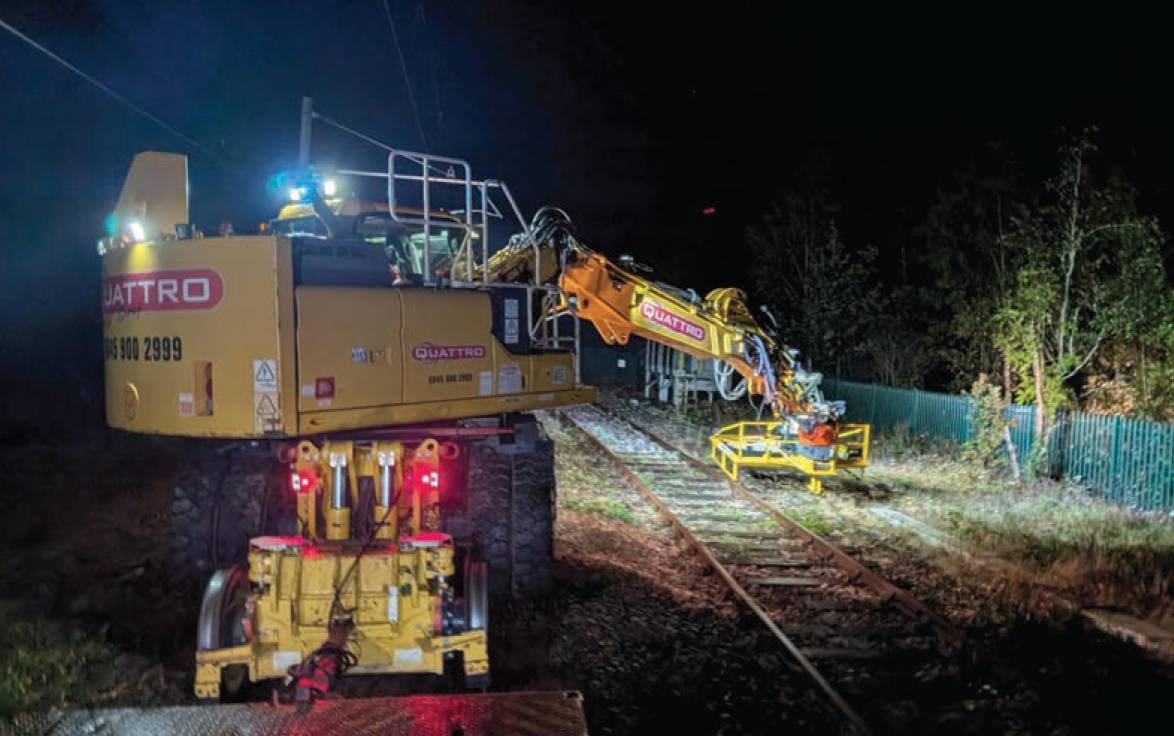
The road-rail vehicle (RRV) solution made light work of these challenges. Requiring just two members of the Severn Partnership team and two staff members from partnering company, Quattro, we were able to drastically reduce boots on ballast when compared to traditional survey methods. By mounting our Stream UP technology to the RRV via a mechanical arm, high-accuracy data was able to be collected 12 times quicker than if completed manually.
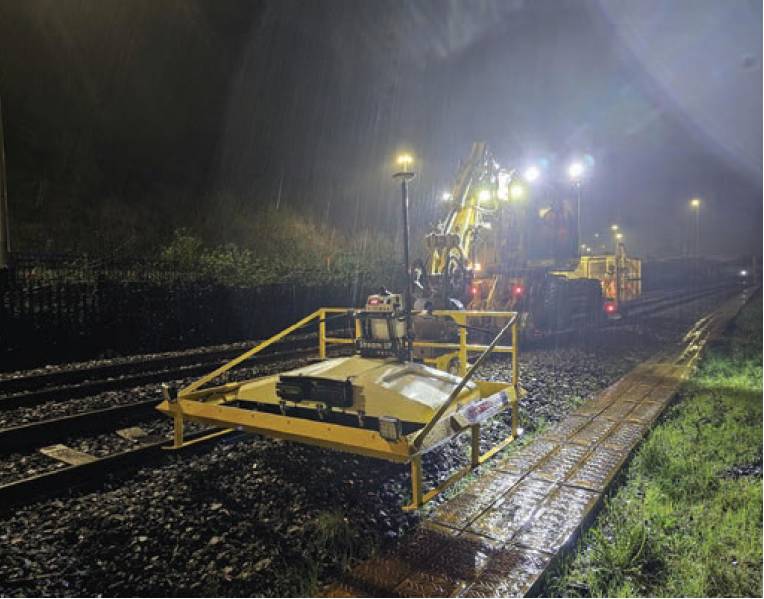
When in place, the Stream UP hovered above the track and made no contact with the rough ballast below, requiring no physical effort to move the equipment along the track and no safety risks from excessive manual labour. Transporting the technology to and from site also carried little risk, and was driven between locations to save on project time and improve safety.
A detailed report including confidence levels for culvert identification was provided. KMZ files of each linear feature identified were also handed over with CAD drawings in both OS and SnakeGrid formats.

Reducing site time by 80% when compared to traditional methods, makes this approach ideal for collecting data quicker across larger work banks. On this project, it also resulted in benefits for a range of stakeholders. The client’s data was able to be turned around within 24 hours of visiting site and delivered the next shift, meaning prompt action when public safety was at risk. Additional data on other identified features for risk assessments, such as voids and bridge decks was also presented. Less time on-site improved safety for rail, Severn Partnership and Quattro personnel and the general public faced fewer disruptions to their rail service.
By leveraging GPR technology mounted on an RRV, Severn Partnership revolutionised rail asset location surveying. The approach improved safety, reduced project timelines, enhanced data quality and delivered significant operational efficiencies for Amey and Transport for Wales.