
BUILDINGS IN THE AGE OF CLIMATE CHANGE
Analysing the carbon cost of building homes
The period of 2010-2019 is considered the hottest decade of the century, causing not only dangerous weather patterns but also an impact on societies (UK Export Finance, 2021). The 21st session of the United Nations Framework Convention on Climate Change (UNFCCC) Conference of the Parties (COP 21) resulted in an agreement with a reaffirmation of limiting the global temperature rise to well below two degrees; whilst emphasising restricting the increase to 1.5 degrees (Center for Climate and Energy Solutions, 2015: Tobin et al., 2018).
To realise this, the emissions of global greenhouse gas emissions must be halved by 2030 (UK Export Finance, 2021). Prior to COP 21, every nation had to submit its own Intended Nationally Determined Contributions (INDCs). The 2015 COP was an integration of these INDCs into an agreement and the conference is considered as one of the successful climate change conferences (Tobin et al., 2018).
Climate Change Act 2008 set a target for the UK’s net carbon account to be at least 80% lower than the 1990 baseline. This target was later amended in 2019 to reflect a reduction of at least 100% lower than the 1990 baseline value (The National Archives, 2008: Keeping, M., & Shiers, D.,2018). To deliver this and to meet the commitments made in the Paris Agreement, decarbonisation will need to happen by the 2030s and continue beyond 2050 (MacLean et al., 2016).
Buildings are recognised to play a significant role in contributing to climate change and owners and developers have been setting targets to reduce emissions, although these targets are somewhat arbitrary (Keeping, M., & Shiers, D., 2018). These buildings, in particular existing domestic buildings, are largely responsible for these emissions and constitute 27% of total UK emissions (Sweett, 2014). Approximately 2/3rd of the homes in 2050 will have been constructed prior to 2005, which would not have been subjected to 2006 stringent building regulations with regards to part L.
Buildings are recognised to play a significant role in contributing to climate change and owners and developers have been setting targets to reduce emissions.
This accounts for a major share of the housing stock and hence an upgrade is vital. This presents a major challenge when most of the houses are made up of solid walls (Swan, 2013). As the government faces this challenge, it is expected that the households will increase by 23% by 2050 with a 23% energy consumption rise if no action is taken. If the existing housing stock is considered, then around 80% of the houses in 2050 will be the ones standing today, which will need to be the focus of government’s ambition of reducing carbon emissions (Boardman, 2007). Ravetz (2008) has discussed the same challenge and questions the fitness of these existing houses in 2050 and how the performance of these houses can be improved through renewals/adaptation.
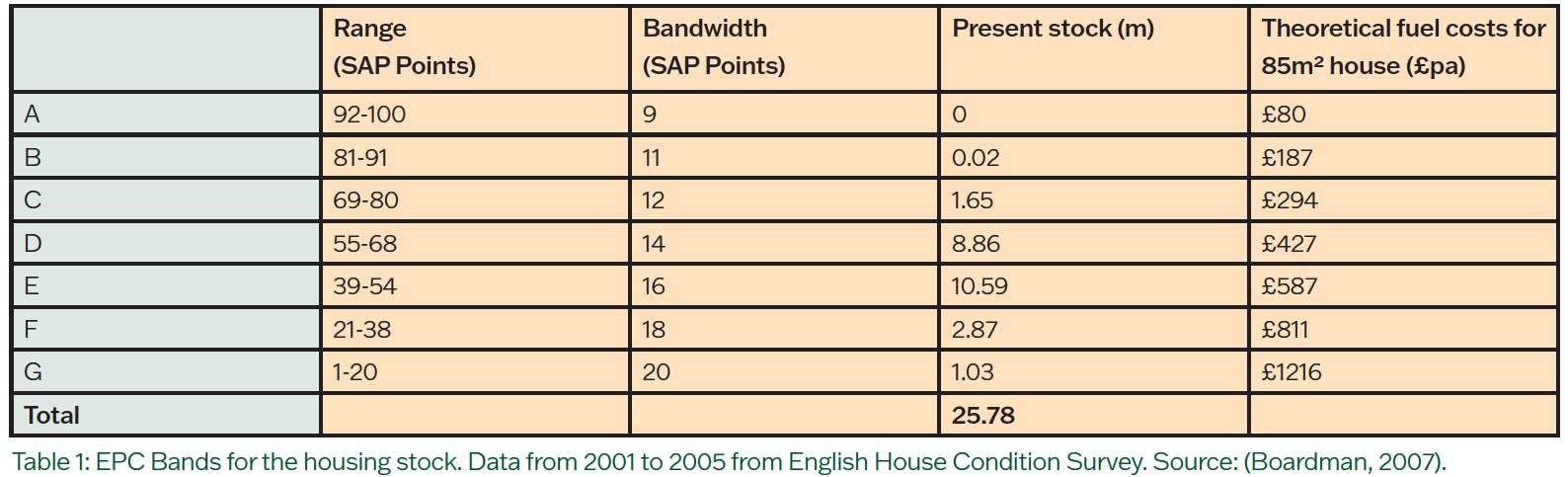
The introduction of Energy Performance Certificate (EPC) is an important policy, which raises awareness on the performance of a house through potential improvements. It identifies appropriate actions to achieve these improvements (Boardman, 2007). Table 1 shows EPC bands against the housing stock as of 2001. The energy efficiency of the housing stock has seen steady improvement with the average energy rating (SAP) going up by seven points from 42 in 1996 to 49 in 2006 (Ravetz, 2008). There has been huge recent progress in this policy with half of England’s houses being EPC rating C or more, which is up 14% from 2010 (Department of Levelling Up, 2024).
About three homes in five have a D rating or worse and those built pre-1900 have an average rating of E due to poor insulation and lack of double glazing (Magnus, 2021). According to ONS (2023), dwellings constructed before 1930 have average score of 59, which is equivalent to band E. This translates to a higher CO2 emission from these existing dwellings when compared to the new built.
A late 19th-century semi-detached property with three bedrooms (approx. area 105.9m2 ) was studied. Based on the construction, insulation, airtightness and other properties of the property, it can be concluded that the EPC rating will likely be E or worse. A solid-walled terraced house with very poor insulation, single glazing and with gas central heating system still has less 20 SAP points (Boardman, 2007; Boardman, 2010). A retrofit will make it more energy efficient whilst taking a step towards government’s zero-carbon goal. By improving this rating, the SAP points’ range can be improved based on table 1. This consequently results in reduced annual fuel expenditure and emissions. Table 1 shows how this cost can be reduced by approximately three to four times by making improvement from band E to B.
Building Regulations Part L1A sets minimum threshold values for fuel conservation. Space heating demands is dependent on two factors. First, the thermal efficiency of the structure, and the second being the air leakage. The thermal efficiency within building regulations is defined by U value for key elements such as walls, windows, roofs etc. and lower the value of the fabric, the lower the energy required to heat the space (Davies, 2016). The building has very poor energy efficiency and large CO2 emissions based on the elements discussed below.
Loft
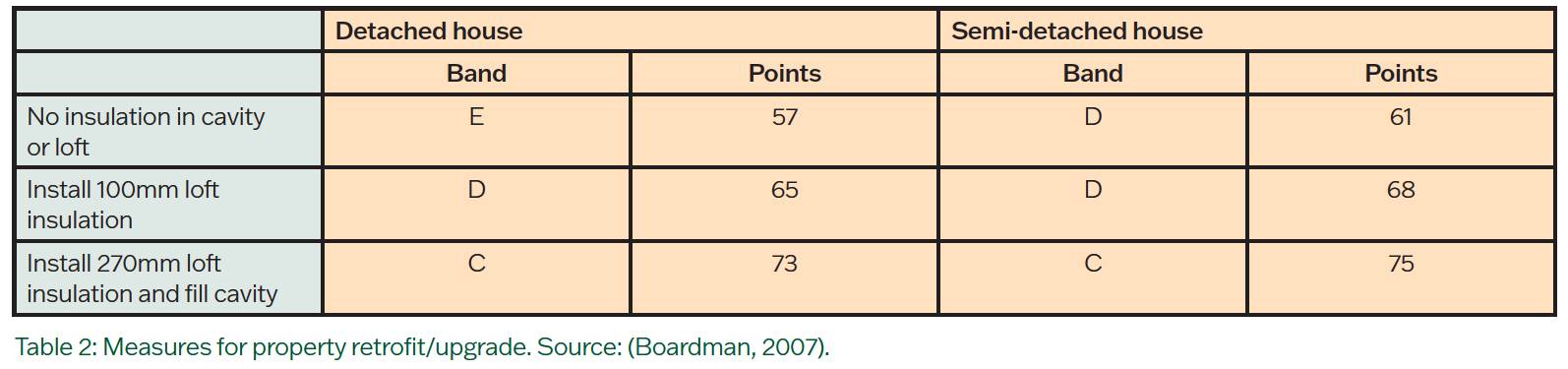
As a property is considered to lose most of its heat from the loft, it is important to insulate it. This is a relatively cost-effective method, and it is recommended to have at least 270mm of wool insulation to retain the bulk of house heat (Woodcock, 2022). The property has 100mm of this insulation, which falls below the recommended value. This 100mm of thickness is the most common thickness found in the UK and the performance may even be worse through compaction when heavy items are stored above (Boardman et al., 2005). With slate roof and assuming felt layers, the U-value can be 6.45 (Ji et al., 2019). Insulating the loft will help improve the band/points, as shown in table 2.
Non-insulated solid walls and suspended floors
Almost seven million properties have solid walls; almost all of which are non-insulated due to high insulation cost (Boardman et al., 2005; Swan, 2013). Only 4% of solid walls in pre-1919 properties are insulated, prompting a need for a retrofit for this property to meet a Carbon Emissions Reduction Target (Pelsmakers et al., 2016). Solid-walled properties built prior to 1920 are considered to fall within the worst energy efficiency bands and the energy bills could well be double that of houses built after 2002 (Kingspan, 2022) with a default u-value of 2.1 W/ m2K (BRE, 2016). For 225mm brickwork and internal plastering, the u-value from default properties of individual elements is 2.05 W/m2 K (Ji et al., 2019).
Suspended timber floors make almost 10 million of the UK dwellings and an upgrade to these floors would reduce energy use. It is unknown how many pre-1919 ground floors are insulated.
As the property has non-insulated solid walls, it would be more expensive to heat and a retrofit would not only result in reduction in bills, but also the house price is likely to increase (Kingspan, 2022). Energy demand can be reduced by making improvements to pre-1996 housing stock. Suspended timber floors make up almost 10 million of UK dwellings and an upgrade to these floors would reduce energy use. It is unknown how many pre-1919 ground floors are insulated (Pelsmakers et al., 2016).
As the suspended ground floors for the property are uninsulated, the heat loss will depend on the overall building fabric efficiency, which in this case (uninsulated dwelling) is estimated to be 10% (Pelsmakers et al., 2016). Hence, insulating the floors would decrease the energy use and carbon emissions. U-value for uninsulated floors (assuming Perimeter/Area Ratio of 0.6) is 0.83 by using IP 3/90 formula (Warmafloor, n.d.).
U = 0.05 + 1.65(P/A) - 0.6(P/A)2
U=0.05+1.65(0.6)-0.6(0.36)=0.05+0.99 - 0.216=0.83
Windows and airtightness
Single-glazed windows have poor insulation and can cause significant heat loss. A double-glazed or triple-glazed window can add a score of 5-10 on the EPC (Belvoir, 2023). Sash windows of single glass do not provide a height level of airtightness either (Energy Saving Trust, n.d.a). The property has poor airtightness due to background infiltration of 1 ACH. Replacing these windows with modern sealed ones will not only result in reduced heat loss but also less infiltration. Existing data supports this reduction by 0.1 ACH to 0.3 ACH, with value dependent on the actual house volume and number of windows (Ridley et al., 2003). Single-glazed sash windows have u-value of approx. 5.4 W/m2 K (Baeli, 2013). As the airtightness is quite poor, this can cause considerable heat loss even after the insulation has been considered (Price, 2020). All houses should be airtight with a retrofit limiting threshold value being the same as that of Passivehaus standard typically 0.6 ACH @ 50 Pa (Baeli 2013; Price 2020).
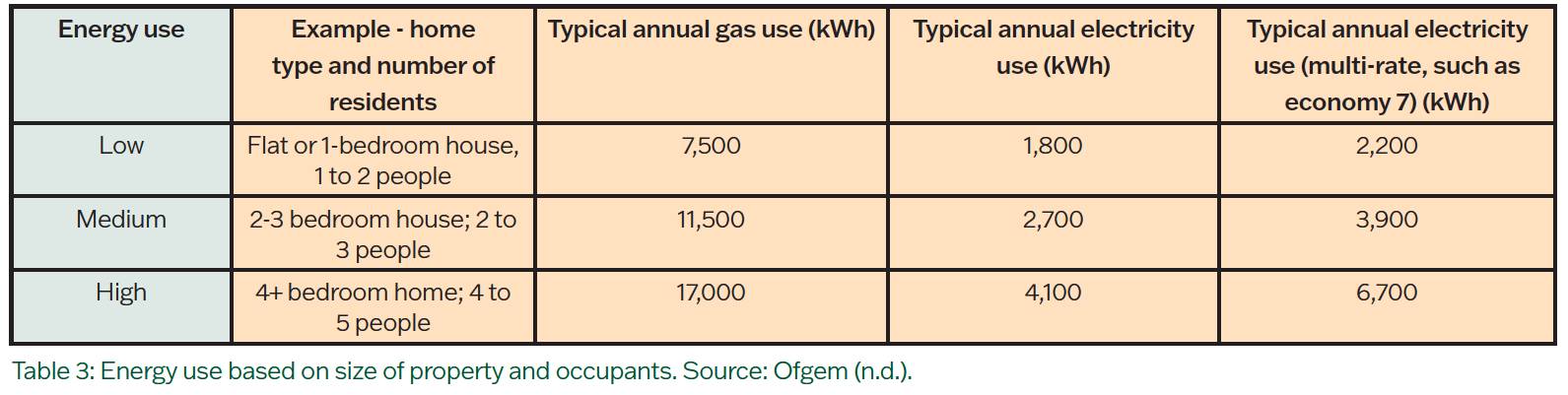
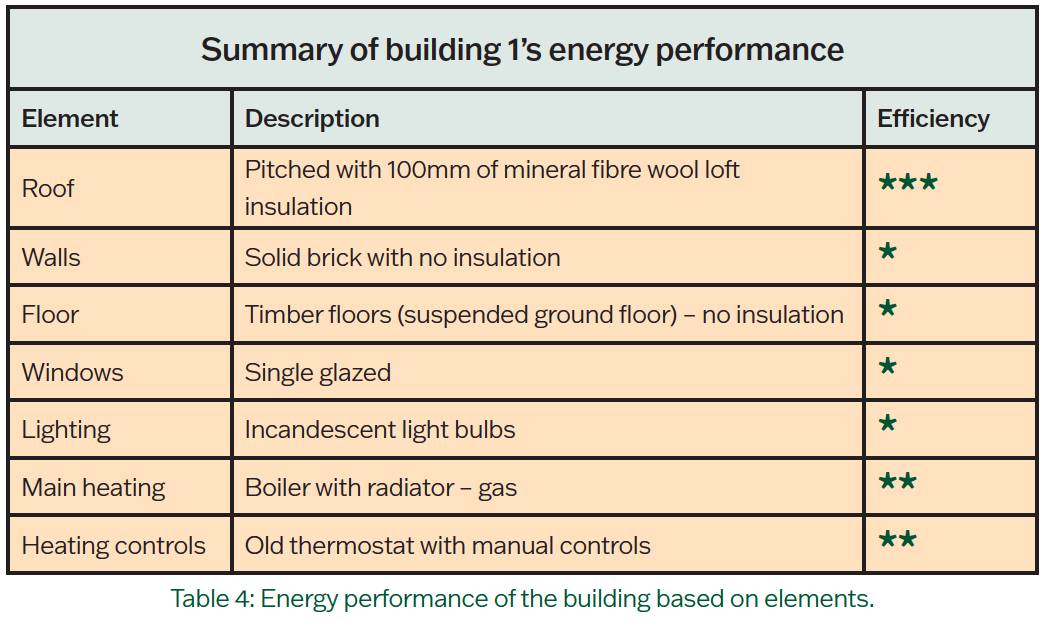
Assuming two adults and two children being occupants of the building, the average energy use could be somewhere between medium and high bands based on Ofgem (n.d.) shown in Table 3. However, the actual usage would be much higher due to poor insulation. Based on the current condition, the energy performance of the building is summarised in Table 4.
The retrofit strategies consider insulating the fabric first. This fabric-first approach has been adopted as conduction and infiltration cause loss of heat via fabric of the dwelling (Ji et al., 2019).
Loft
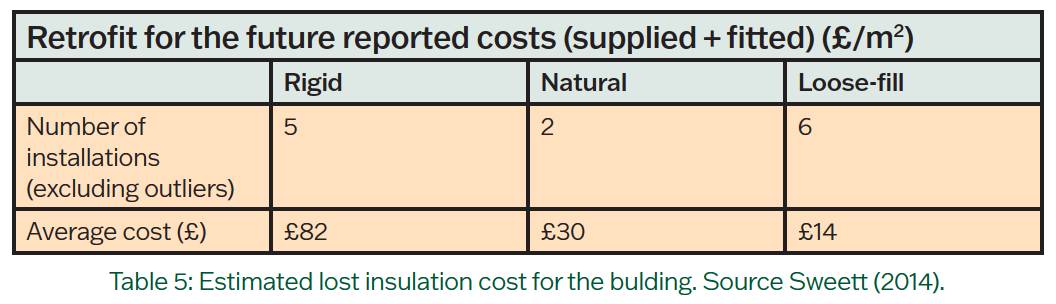
Loft insulation is a cost-effective measure and may also be supported under government schemes (Boardman et al., 2005). The existing 100mm of mineral wool insulation is recommended to be increased up to 400mm to avoid any future top-ups. Sweett (2014) has mentioned most of the projects installing as much loft insulation as possible to avoid future labour costs. The estimated cost for the supply and fitting for the mineral wool insulation is approximately £15/m2 (Beckingham, 2024), Table 5. Assuming the loft size is the same as the floor area below, the total cost could be around 55x15= £825. An upgrade from 130mm to 270mm can save up to an additional £40 with environmental saving of up to 95kgCO2/ year (Beckingham, 2024).
Increasing this insulation from 100mm (13 points) to 400mm (16 points) can add three points (Bouquet, 2017). Polesden Farm Cottage was given rating of F28 in August 2009. Using CROHM software, a measure to increase loft insulation to 300mm from the existing insulation was given to increase three SAP points at a cost £709 (Historic England, n.d.).
Solid wall
A hybrid solid wall insulation is recommended, which would help minimise the space loss whilst retaining the look of the property. Buildings with solid walls suffer greater heat loss compared to cavity walls and have a lower SAP rating (BRE, 2005). Solid wall insulation is considered expensive and disruptive (Smith, 2023); however, the cost is decreasing with an increase in experience (Sweett, 2014). Solid wall insulation should be carried out by expert contractors as several studies have indicated less savings obtained than anticipated (BRE, 2016).
To achieve desired results, the u-value for the wall should be calculated using the recommended method of 10 days (BRE, 2016). As a retrofit measure, a 90mm expanded polystyrene (EPS) external wall insulation (EWI) to rear and side walls and 80mm polyisocyanurate (PIR) internal wall insulation (IWI) to front wall are recommended. An external or internal wall insulation applied needs to achieve u-value of 0.3 W/m2 K (Swan, 2013) with almost a similar value of 0.35 reported in the Salford Energy House case study (Ji et al., 2019). Using the Kingspan U-Value calculator, the u-value is shown below:
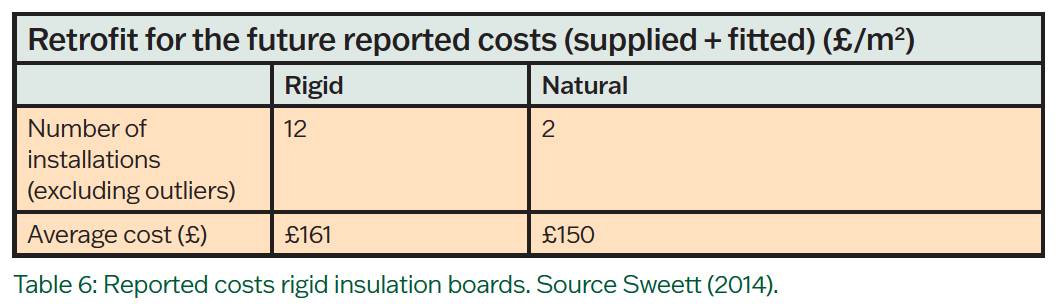
Using Kingspan Hybrid solid wall insulation to the external wall in a study has been found to have achieved the biggest saving in retrofit measure (Farmer et al., 2017). The supply and fitting cost are shown in Table 6. A solid wall insulation is expected to increase the SAP points around 10-20 with a cost of £20,000 for a terraced house (Sear Property, n.d.). A solid brick-walled cottage (floor area 105m2 ) owned by National Trust was given EPC rating of E41 and an environmental impact rating of E39. To increase points by 15, internal or external insulation was recommended with an indicative cost of £4,000 to £14,000 (Historic England, n.d.).
Floor insulation
Suspended floor insulation can be achieved whilst implementing other retrofit measures. A mineral wool insulation is recommended. Typical cost of installation could be around £4,700.
Low-energy lighting
Replacing all bulbs with LED alternatives can reduce approx. 63 kgCO2 per year (Energy Saving Trust, 2020), Table 7.

Draught proofing
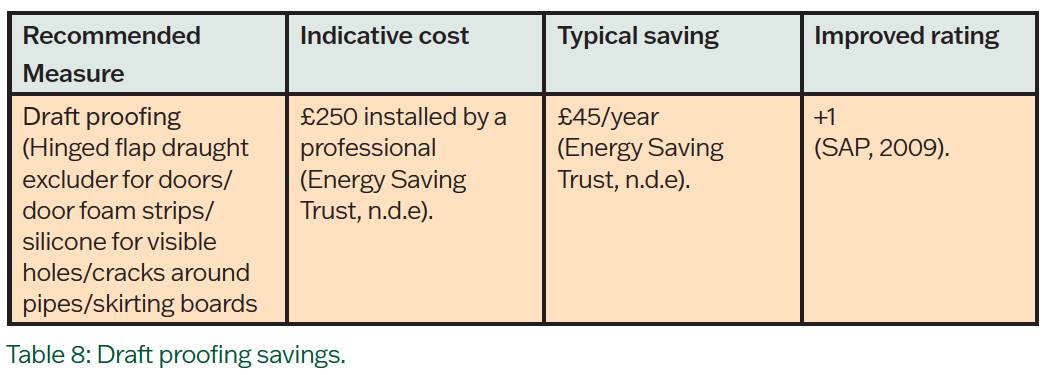
Based on almost similar saving to LED lighting, approximately 70 kgCO2 /year can be saved, Table 8.
A-rated combi boiler
A switch to a highly efficient boiler with a smart thermostat and TRVs can make a massive impact on EPC rating by adding up to 40 points (Belvoir, 2023). For the Park House case study, modelled measures included an A-rated combi boiler with multi-zones giving energy efficiency to E53 from F31 with a cost of around £5,200 (Historic England, n.d.).
Replacing a G-rated boiler with a modern one can save 1220 kgCO2 /year, while smart TRVs can save £75/330 kgCO2 /year (Garner, 2023). Intelligent/smart TRV can increase SAP point by 1-7 and have low installation cost of around £250 (SECURE, n.d.).
Windows
Assuming all windows are not properly sealed due to high infiltration, replacing them with well-fitted/sealed windows can decrease infiltration by 0.3 ACH (Ridley et al., 2003). To keep the original design and look, A++-rated double-glazed argon-filled windows are recommended. As a triple-glazed window could cost around 40% more with a saving of almost £11.2 over an A-rated (Smith, 2024), a double-glazed option is recommended. One of the biggest problems installing triple-glazed sash windows is the lack of depth in traditional windows, which could result in extra cost (Richard, 2019).
The average cost of a double-glazed sash window is £1,300 per window. Assuming 11 windows, the cost is approximately £14,300, which is close to a typical installation cost of an A-rated window for a semi-detached house (Energy Saving Trust, n.d.a). According to Energy Saving Trust (n.d.a), the average saving for replacing single glazed is £180/410KgCO2 per year and can add five points to the rating. Polesden Farm Cottage saw a similar improvement with this measure (Historic England, n.d.). New argon-filled double-glazing units have a u-value of 1.10–1.24 W/m2 K (Baeli, 2013; Sweett, 2014).
Further retrofit measures
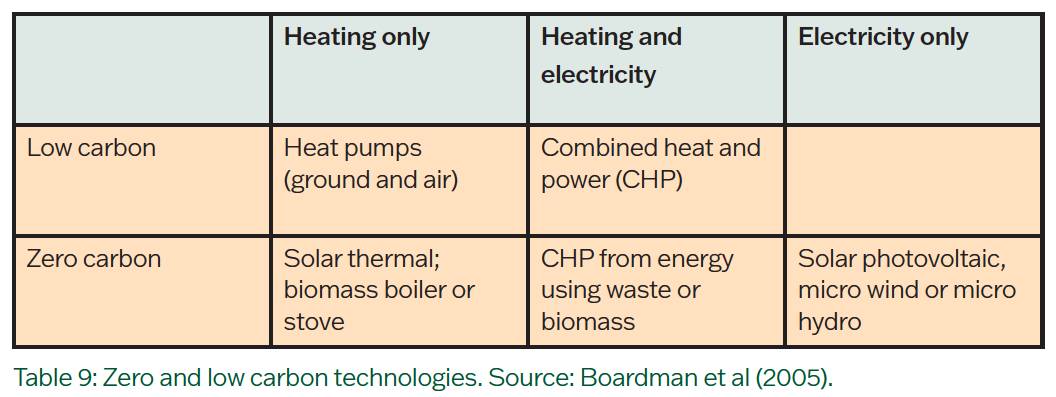
Once the property has been insulated to the right standard then the likelihood of a heat pump to provide and maintain a comfortable level of temperature/heating will be higher and are considered more eco-friendly (Woodcock, 2022). The solar panels have lower carbon footprint and can give considerable savings when the price of energy has rocketed recently (Casalis, 2024). Table 9 shows available low/zero carbon technologies, which could transform the property to mini power station by generating its own electricity. These measures can be considered if aiming for the highest possible standard and after the recommended measures have been taken.
- The key statistics are based on the following available values:
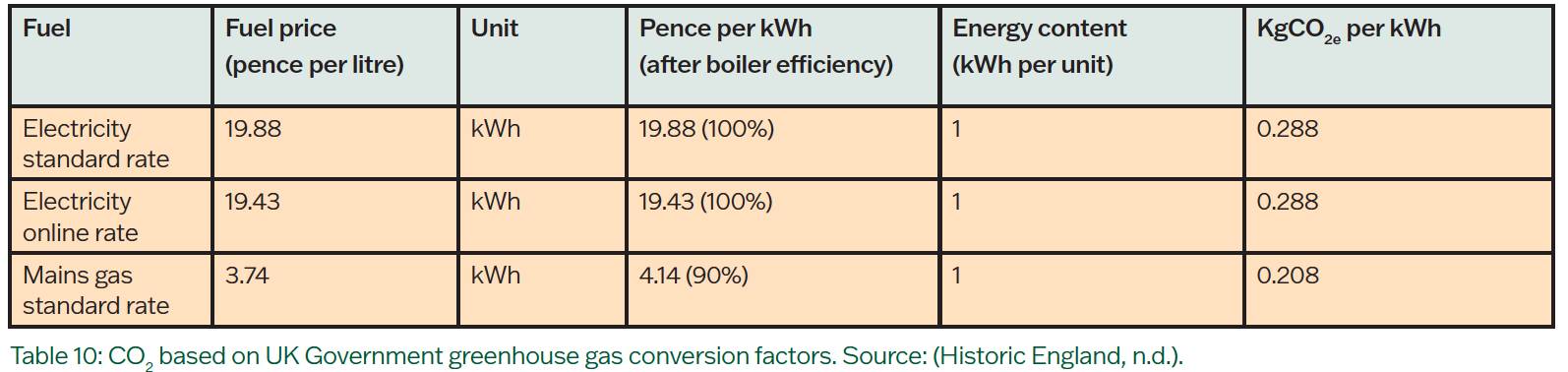
- For CO2 emissions/Environment Impact Rating calculations see Table 10.
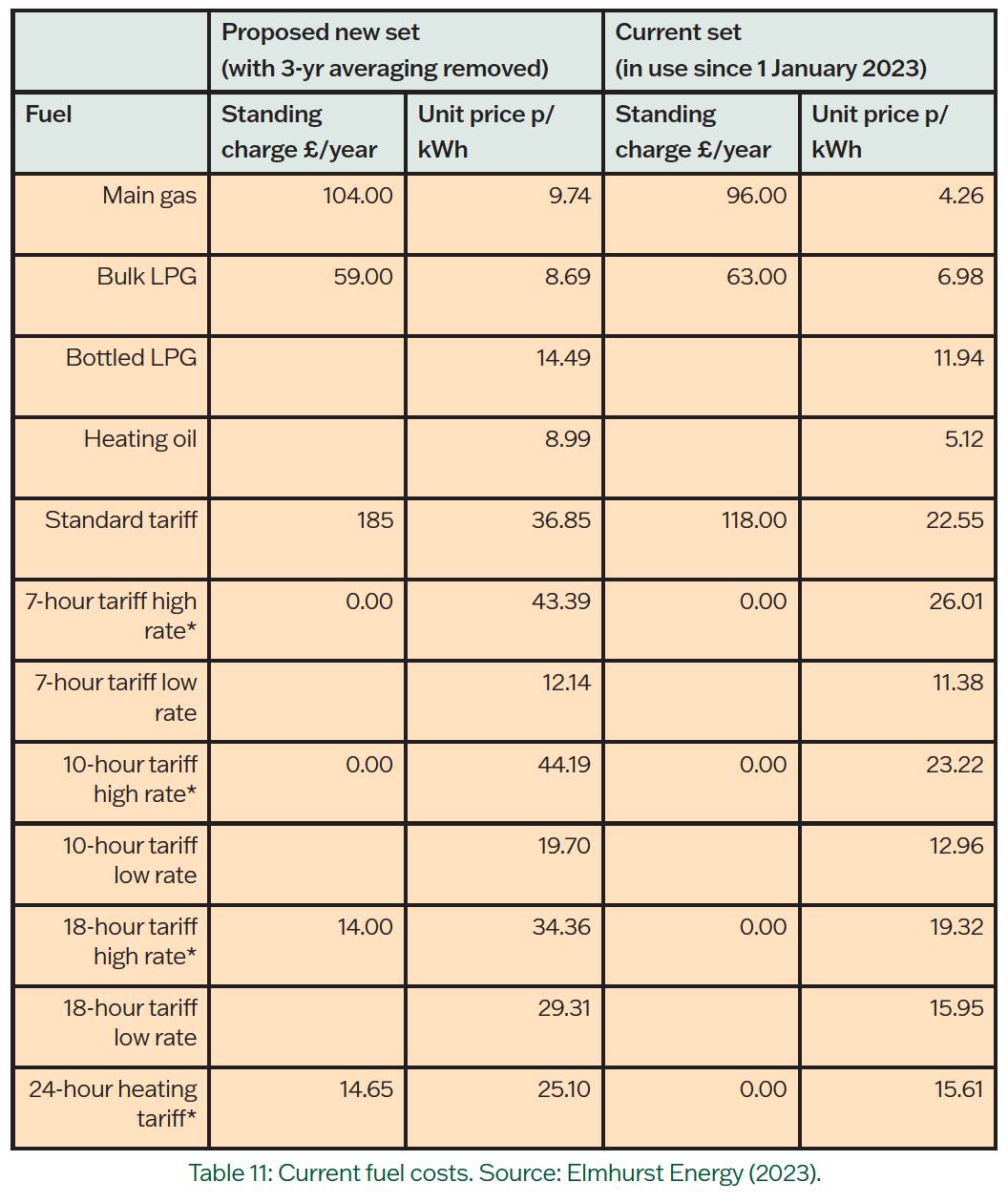
- For ECF total cost calculations see Table 11.
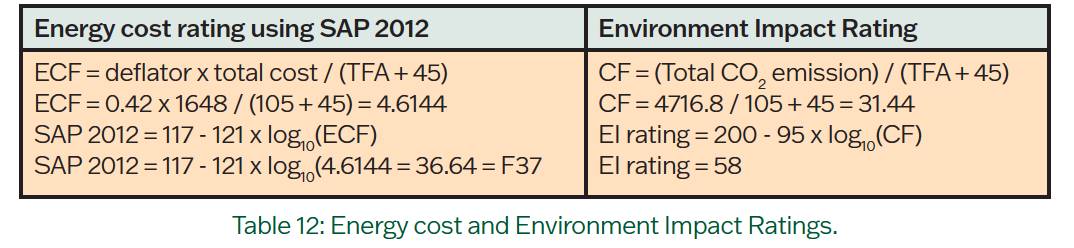
- Energy Cost Rating and Environment Impact rating (pre retrofit, see Table 12.
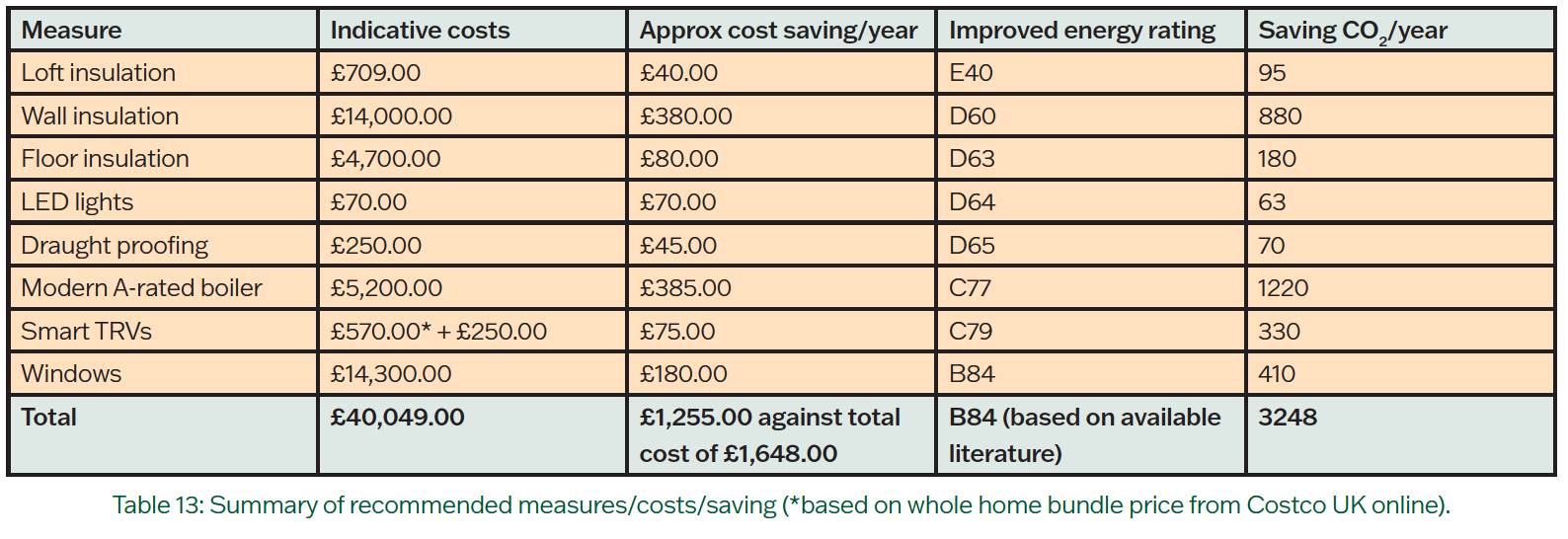
- Summary of recommended measures/costs/savings, see Table 13.
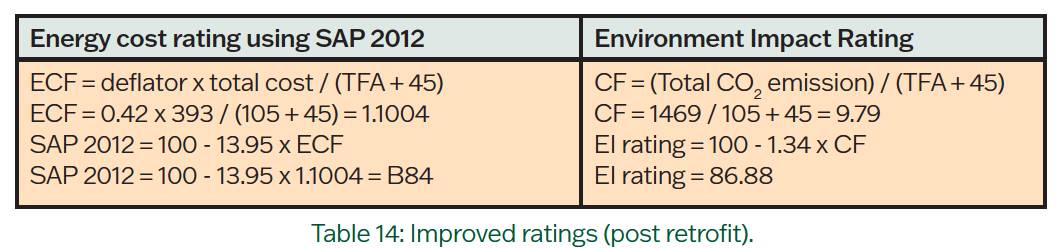
- Improved ratings (post retrofit), see Table 14.
Although government regulations and technology play an important role in reducing carbon emissions, the involvement of the public is also critical to this mission. Although labels and measures on EPC do raise awareness within some, a major awareness programme is required to encourage people move up the EPC bands (Boardman, 2007). One of the key behavioural changes, which can yield energy saving is the transition to LED lights, which can result in not only saving is bills bit also the CO2 emissions (as per section 4.4). This could also include turning off devices e.g., printers, PCs, TVs, when not in use. The behavioural changes towards the use of water can also reduce carbon footprint, whilst reducing the energy usage of a property.
The Fairy brand by P&G has found that people can reduce the emissions associated with hand/machine washing by 30-60 % by reducing the temperature to 23°C. Their latest formula is designed with a fast-activating cleaning system and results in reduced emissions (Mace, 2023). Ariel (n.d.) also claims saving 57% of energy cost when washing at 30°C when compared to 40 °C using their innovative products Ariel pods and gel. This resonates with a review, which suggests similar interventions without much cost by people (Department of Energy & Climate Change, 2012a). Although behavioural trends are difficult to quantify, there seems to be a trend in how people use appliances e.g., moving towards lower temperature washing (Boardman et al., 2005).
A research study of 70 three-bedroom semi-detached properties, which consisted of semi-structured interviews and analysed energy use and the EPC ratings, found that the behaviours of occupants it be clustered under three main headings (Department of Energy & Climate Change, 2012b).
- How people manage the temperature in their homes and their awareness of energy implications.
- Occupancy of properties-who is at home and when, and what they do.
- Physical properties of the home.
By making behaviour changes towards the effective use of smart energy management systems, the first two main headings of above study can help reduce energy consumption and carbon emissions. The use of such systems e.g. tado allows create smart schedules/set points on an individual room basis and offers additional features like geofencing and open windows detection. Dr. Domin of Trill Impact Ventures says, “By leveraging their leadership in smart thermostats to enter the rapidly growing smart energy tariffs market, tado is enabling significant household cost savings, access to renewable energy, and CO2 reductions at a crucial time” (Silicon Canals, 2023). However, there is lack of awareness for such technologies and even if they are aware of such technologies, they may not be willing to adopt this technology (Boardman et al., 2005).
Another behaviour change could be realising how different comparison websites such as uswitch and MoneySuperMarket, can allow users to switch their deals with ease and opt for green tariffs, whilst reducing their energy bills. It is important for households to be provided carbon content of the electricity they pay for. This is being enforced in the UK and few households realise that they can save 42% of the carbon by switching between six main suppliers (Boardman et al., 2005).
Other examples of such behaviour impacts include installation smart meters, changing payment method (pre-pay to direct debit), opting for energy saving sessions (if available), installing low carbon technologies (air/ground source heat pumps), working on EPC recommendations to improve the rating and by not using unnecessary appliances. It was found that the cost of prepayment was £120 more than by someone paying by direct debit in 2006. Similarly, smart meter allows to keep an eye on actual energy use rather than being billed on estimates (Boardman, 2007). Octopus has also been running energy sessions to allow people to cut their consumption at certain times to not save only on their bills but also playing a role for the planet (Octopus, n.d.).
---
Bibliography
Ariel. (n.d.). Cold water washing: does it really get clothes clean? https://www.ariel.co.uk/en-gb/how-to-wash/how-to-do-laundry/cold-water-wash-guide
Baeli, M. (2013). Residential retrofit: 20 case studies. RIBA Publishing.
Beckingham, S. (2024, January 31). How Much Does Loft Insulation Save You?. https://ecoquotetoday.co.uk/insulation/loft-insulation-savings#cost-and-savings-of-insulating-a-loft
Belvoir. (2023, January 04). EPC Rating 101: What Is EPC Rating, Why Is It Important And How To Improve It. https://www.belvoir.co.uk/articles/epcrating-101/
Boardman, B, Darby, S, Killip, G, Hinnells, M, Jardine, CN, Palmer, J, and Sinden, G. (2005). 40% house. Environmental Change Institute, University of Oxford. Oxford, UK.
Boardman, B. (2007). Home Truths: A Low-Carbon Strategy to Reduce UK Housing Emission by 80% by 2050. Environmental Change Institute, University of Oxford, Oxford. https://www.eci.ox.ac.uk/sites/default/files/2023-07/boardman07-hometruths.pdf
Boardman, B. (2010). Fixing fuel poverty: challenges and solutions. Earthscan. https://doi.org/10.4324/9781849774482
Bouquet, A. (2017, May 22). How will loft and cavity insulation affect my EPC Rating? https://www.london-epc.co.uk/will-loft-cavity-insulation-affect-epcrating/
BRE. (2005). Energy efficiency. https://files.bregroup.com/bre-co-uk-file-library-copy/filelibrary/pdf/rpts/Energyefficiency.pdf
BRE. (2016). Solid wall heat losses and the potential for energy saving. https://files.bregroup.com/bre-co-uk-file-library-copy/filelibrary/pdf/projects/swi/UnintendedConsequencesRoutemap_v4.0_160316_final.pdf
Casalis, C. (2024, January 31). Solar panels – are they worth it? How much can you really save? https://www.moneysavingexpert.com/utilities/free-solarpanels/
Center for Climate and Energy Solutions (2015). 21st Session of the Conference of the Parties to the United Nations Framework Convention on Climate Change (COP 21). OUTCOMES OF THE U.N. CLIMATE CHANGE CONFERENCE IN PARIS, 2015, Paris, France. https://www.c2es.org/wp-content/uploads/2015/12/outcomes-of-the-u-n-climate-change-conference-in-paris.pdf
Davies, J. (2016, January 19). Building Regulations And U-values: How have they changed? https://great-home.co.uk/building-regulations-u-values-how-have-they-changed/
Department of Energy & Climate change. (2012a). What Works in Changing Energy-Using Behaviours in the Home? https://assets.publishing.service.gov.uk/media/5a7591ede5274a545822c8ac/6921-what-works-in-changing-energyusing-behaviours-in-.pdf
Department of Energy & Climate change. (2012b). Domestic energy use study: to understand why comparable households use different amounts of energy. https://assets.publishing.service.gov.uk/media/5a78b12640f0b62b22cbc05c/6919-domestic-energy-use-study.pdf
Department of Levelling Up. (2024). Energy efficiency drive for historic homes. https://www.gov.uk/government/news/energy-efficiency-drive-for-historic-homes
Elmhurst Energy. (2023, February 15). Fuel Cost Factors updated within Domestic Energy Performance Certificates (EPCs). https://www.elmhurstenergy.co.uk/blog/2023/02/15/fuel-cost-factors-updated-within-domestic-energy-performance-certificates-epcs/
Energy Saving Trust. (2020). Getting the best out of your LED lighting. https://energysavingtrust.org.uk/getting-best-out-your-led-lighting/
Energy Saving Trust. (n.d.a). Reducing home heat loss Windows and doors. https://energysavingtrust.org.uk/advice/windows-and-doors/
Energy Saving Trust. (n.d.b). Reducing home heat loss Solid wall insulation. https://energysavingtrust.org.uk/advice/solid-wall-insulation/
Energy Saving Trust. (n.d.c). Reducing home heat loss Floor insulation. https://energysavingtrust.org.uk/advice/floor-insulation/
Energy Saving Trust. (n.d.d). Heating your home Boilers. https://energysavingtrust.org.uk/advice/boilers/
Energy Saving Trust. (n.d.e). Reducing home heat loss Draught-proofing. https://energysavingtrust.org.uk/advice/draught-proofing/
Everest. (n.d.). How does double glazing work? https://www.everest.co.uk/double-glazing-windows/how-does-double-glazing-work/
Farmer, D., Gorse, C., Swan, W., Fitton, R., Brooke-Peat, M., Miles-Shenton, D., & Johnston, D. (2017). Measuring thermal performance in steady-state conditions at each stage of a full fabric retrofit to a solid wall dwelling. Energy and Buildings, 156, 404–414. https://doi.org/10.1016/j.enbuild.2017.09.086
Garner, P. (2023, February 15). How to Reduce your Carbon Emissions UK. https://heatable.co.uk/boiler-advice/how-to-reduce-your-carbon-emissions
Gill, T. (2024, January 2). Cost of Double Glazed Sash Windows 2024. https://phairwindowsandglass.co.uk/cost-of-double-glazed-sashwindows /#:~:text=Cost%20of%20Double%20Glazed%20Sash%20Windows%20UK,with%20traditional%20timber%20sash%20windows.
Historic England (n.d.). Energy Efficiency and Historic Buildings: Energy Performance Certificates (EPCs) Case Studies. https://historicengland.org.uk/images-books/publications/eehb-epcs-case-studies/heag0307-epcs-case-studies/
Ji, Y. (2024). Sustainable building design strategies – Part 2 [Course Presentation]. Salford University. https://blackboard.salford.ac.uk/ultra/courses/_ 189088_1/outline
Ji, Y., Lee, A., & Swan, W. (2019). Retrofit modelling of existing dwellings in the UK: the Salford Energy House case study. International Journal of Building
Pathology and Adaptation, 37(3), 344–360. https://doi.org/10.1108/IJBPA-12-2018-0106
Keeping, M., & Shiers, D. (Eds.). (2018). Sustainable building design: principles and practice. Wiley Blackwell.
Kingspan. (2022, April 08). Is it Possible to Insulate Solid Walls? https://www.kingspan.com/gb/en/knowledge-articles /is-it-possible-to-insulate-solidwalls /#:~:text=For%20a%20standard%20solid%20brick,fixings%20and%20the%20surface%20skimmed.
Kingspan. (n.d.). U-value Calculator. https://u-valuecalculator.com/gb
Knight, C. (2024, January 22). Energy Price Cap Calculator – how much more will you pay from January? https://www.moneysavingexpert.com/utilities/what-are-the-price-cap-unit-rates-/
Mace, M. (2023, May 30). Fairy offers dishwashing tips to help consumers reduce emissions. https://www.edie.net/fairy-offers-dishwashing-tips-to-help-consumers-reduce-emissions/
MacLean, K., Sansom, R., Watson, T. and Gross, R. (2016). Managing Heat System Decarbonisation: Comparing the impacts and costs of transitions in heat infrastructure. Imperial College Centre for Energy Policy and Technology.
Magnus, E. (2021, November 12). Could Britain’s Victorian housing stock see values plummet if the government pushes through EPC regulation - and should owners be worried just yet? https://www.thisismoney.co.uk/money/mortgageshome/article-10191013/Britains-Victorian-housing-stock-values-plummet-government-introduces-EPC-regulation.html
Ofgem. (n.d.). Average gas and electricity usage. https://www.ofgem.gov.uk/information-consumers/energy-advice-households/average-gas-and-electricity-use-explained
Octopus Energy. (n.d). Octoplus SAVING SESSIONS. https://octopus.energy/saving-sessions/
ONS. (2023). Energy efficiency of housing in England and Wales: 2023. https://www.ons.gov.uk/peoplepopulationandcommunity/housing/articles/energyefficiencyofhousinginenglandandwales/2023
Pelsmakers, S., Fitton, R., Biddulph, P., Swan, W., Croxford, B., Stamp, S., Calboli, F., Shipworth, D., Lowe, R., & Elwell, C. (2016). Heat-flow variability of suspended timber ground floors: Implications for in-situ heat-flux measuring.
Price, S., Baines, A., & Jennings, P. (2020). Demystifying Airtightness. Passivehaus Trust.
Ravetz, J. (2008). State of the stock-What do we know about existing buildings and their future prospects?: Foresight Sustainable Energy Management and the Built Environment Project. Energy Policy, 36(12), 4462–4470.
Richard, c. (2023, March 11). WHAT WILL TRIPLE GLAZED SASH WINDOWS DO FOR NOISE REDUCTION. https://londonsashwindows.com/what-will-triple-glazed-sash-windows-do-for-noise-reduction/
Ridley, I., Fox, J., Oreszczyn, T., & Hong, S. (2003). The Impact of Replacement Windows on Air Infiltration and Indoor Air Quality in Dwellings.
ROCKWOOL. (n.d.). U-value calculator. https://bim.rockwool.co.uk/u_value/
SAP. (2009). Energy Performance Certificate (EPC). https://assets.publishing.service.gov.uk/media/5a748d20ed915d0e8bf19346/1790388.pdf
Sears Property. (n.d.). New EPC rules coming. https://www.searsproperty.co.uk/news/new-epc-rules-coming.html#:~:text=The%20older%20the%20property%2C%20the,the%20required%20 %27C%27%20rating.
SECURE. (n.d.). Rented homes likely to miss net zero EPC targets. https://www.securemeters.com/uk/rented-homes-likely-to-miss-net-zero-epc-targets/
Silicon Canals (2023, January 26). Munich-based home energy management platform tado° bags €43M to help reduce energy consumption. https://siliconcanals.com/munich-tado-bags-43m/
Smith, S. (2023, September 29). Energy efficiency and EPC ratings: What Landlords Need to Know. https://theindependentlandlord.com/epc-landlords/
Smith, O. (2024, February 16). Argon Filled Double Glazing: Typical Costs and Main Benefits. https://www.ecopreneurist.com/double-glazing /argon-glazedwindows /#:~:text=A%20and%20A%2B%20or%20A, offer%20lower%20or%20higher%20 efficiency.
Swan, W. (2013). Thermal retrofit and building regulations for dwellings in the UK. In W. Swan and P. Brown (Ed.), Retrofitting the Built Environment. John Wiley and Sons. https://usir.salford.ac.uk/id/eprint/34074/
SWEETT. (2014). Retrofit for the Future: analysis of cost data. https://assets.publishing.service.gov.uk/media/5a7599eb40f0b67b3d5c7c49/Retrofit_for_the_Future_-_analysis_of_cost_data_report_2014.pdf
The National Archives. (2008). Climate Change Act 2008. https://www.legislation.gov.uk/ukpga/2008/27/section/1/2019-06-27
Tobin, P., Schmidt, N. M., Tosun, J., & Burns, C. (2018). Mapping states’ Paris climate pledges: Analysing targets and groups at COP 21. Global Environmental Change, 48, 11–21. https://doi.org/10.1016/j.gloenvcha.2017.11.002
UK Export Finance. (2021). Climate Change Strategy 2021- 2024. https://assets.publishing.service.gov.uk/media/6148b3ffe90e070438c9463d/UKEF_Climate_Change_Strategy_2021.pdf
Warmafloor. (n.d.). U-Values, building regulations and insulation. https://warmafloor.co.uk/support-centre/u-values/#:~:text=The%20IP%203%2F90%20
Woodcock, B. (2022, October 6). Heat Pump Insulation: A Complete Guide. https://www.nu-heat.co.uk/blog/heat-pump-insulation-a-complete-guide/#:~:text=Insulating%20your%20loft%20is%20a